If you’ve ever spent $15 on a fancy interactive toy only to watch your cat spend three hours playing with a bit of trash from the packaging, welcome to the club. You’re in good company. We’ve all been there, standing in the pet aisle, convinced this will be the toy that finally gets Fluffy off the couch. Then the box arrives, you tear it open with genuine excitement, and your cat sniffs it once before returning to a sunbeam for a four-hour nap.
Table of Contents
- Why Your Cat Ignores Half the Toys You Buy
- The 2026 Bestseller Breakdown: What Cat Parents Are Actually Buying
- Interactive Wand Toys: The #1 Way to Bond With Your Cat
- Solo Play Toys: Keeping Your Cat Entertained While You’re Away
- Kicker Toys: The Ultimate Cuddle-and-Combat Companion
- Puzzle Toys and Snuffle Mats: Brain Games for Bored Cats
- Catnip, Silvervine, and Beyond: What’s Inside Matters
- Cardboard and Eco-Friendly Options: Sustainable Fun
- Safety First: What to Avoid When Buying Cat Toys
- Budget-Friendly vs. Premium: Does Price Equal Quality?
- How to Build the Ultimate Cat Toy Rotation
- Frequently Asked Questions About Cat Toys
- The Bottom Line: What Your Cat Really Wants
- Share the Cat Love
This guide is different. We dug through bestseller lists, analyzed thousands of reviews, and talked to cat behavior experts to figure out which cat toys actually earn a cat’s stamp of approval in 2026. We looked at what’s flying off Amazon’s virtual shelves, what premium brands are offering, and most importantly, why certain toys trigger that wild-eyed, pupil-dilated hunting mode while others collect dust under the sofa. Whether you’ve got a lazy lap cat, a midnight zoomies champion, or a new kitten still figuring out the world, there’s something here that’ll get those paws moving.
Why Your Cat Ignores Half the Toys You Buy
That adorable plush mouse you picked up because it matched your living room decor means absolutely nothing to your cat. Cats don’t care about aesthetics. They care about prey. Every single toy your cat encounters gets evaluated through one brutally simple filter: does this trigger my hunting sequence? That sequence goes stalk, pounce, catch, and kill. If a toy doesn’t activate at least part of that chain, your cat will ignore it completely.
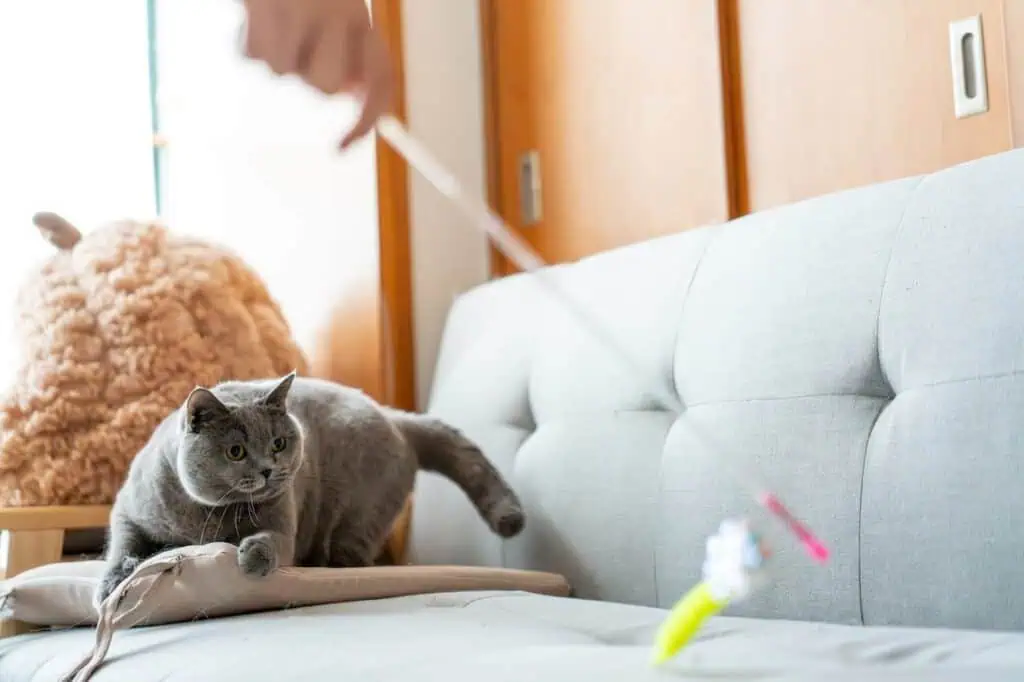
Think about how a mouse moves. It scurries, stops, darts, freezes, then bolts again. Now think about how most people wave a wand toy. They wiggle it in the air like they’re conducting an orchestra. That’s not prey behavior. That’s confusing nonsense to a cat. The secret to toy success isn’t just buying the right item. It’s using it correctly. Mimic the erratic, stop-start movement of real prey. Let the toy hide behind furniture legs. Make it “fearful” of your cat. When you do this, even a cheap feather on a string becomes irresistible.
Another reason toys fail is because they never leave the floor. When a toy sits out 24/7, it stops being exciting prey and becomes just another piece of furniture. Your cat sees it every day at 3 p.m. lounging by the coffee table, doing nothing interesting. That toy has lost all mystery. Toy rotation fixes this instantly. Keep five to seven toys in active circulation and stash the rest in a drawer or closet your cat can’t raid. Every few days, swap them out. When a “new” toy appears after a week in hiding, your cat treats it like fresh prey. This simple trick can double or triple the lifespan of any toy’s appeal.
Boredom in cats isn’t just sad. It can lead to real problems. Cats who lack stimulation often develop destructive scratching habits, overeat out of sheer monotony, or start taking out their pent-up energy on your ankles at 2 a.m. Understanding your cat’s unique play personality is the real game changer here. Some cats are ground hunters who love chasing things across the floor. Others are aerial acrobats who’ll leap four feet for a feather. Some want to wrestle and bunny-kick. Match the toy to the personality, and you’ll never waste money again.
The 2026 Bestseller Breakdown
What Cat Parents Are Buying on Amazon:
Let’s talk numbers. The cat toy market in 2026 has a clear sweet spot when it comes to pricing. The top-selling toys on Amazon cluster almost entirely between $8 and $10. That’s impulse-buy territory, and cat parents are clearly taking the bait. The reigning champion right now is the MeoHui Cat Toys retractable wand, which comes with nine feather refills and has racked up over 49,000 ratings with a 4.5-star average. At $8.80, it’s affordable, replaceable, and apparently irresistible to cats across America.
Hot on its heels is the Catstages Tower of Tracks Interactive Cat Toy. This one’s a beast in the reviews department, holding nearly 68,000 ratings and a 4.6-star average at $8.79. That’s the highest review count among the top five bestsellers, which tells you something about its staying power. Cats don’t get bored of those spinning balls, and cat parents love that it requires zero effort on their part.
Electronic toys are climbing fast in 2026. The number two spot on Amazon belongs to a rechargeable interactive toy with light modes and motion patterns that activate when your cat approaches. These tech-forward options appeal to cat parents who worry about what their feline does during long workdays. The lights mimic the erratic movement of prey, and the rechargeable battery means you’re not burning through AA batteries every week.
What Cat Parents Are Buying on Chewy:
Over on Chewy, seasonal toys are having a moment. Halloween-themed mice in three-packs go for as little as $3.99, while two-story cardboard haunted houses hit $29.99. Your cat doesn’t know it’s October, but you do (and apparently that’s enough to drive serious sales!). Premium brands occupy a higher tier. Jackson Galaxy’s wand toys retail at $16.99, his kickers at $15.99, and his snuffle mats climb to $39.99. KONG sits in a similar range, with most toys between $5.99 and $17.99, though their Play Spaces Camper tops out at $26.99. These prices reflect specialized enrichment design rather than just manufacturing costs. You’re paying for behavioral expertise baked into the product.
Interactive Wand Toys: The #1 Way to Bond With Your Cat
If you only buy one type of cat toy this year, make it a wand toy. Nothing else replicates the hunting sequence as completely or builds the bond between you and your cat as effectively. When you move that wand correctly, you stop being the food dispenser and become a hunting partner. Your cat stalks, chases, leaps, and catches. You control the prey. That shared experience is pure gold for your relationship.
The MeoHui retractable wand earned its bestseller status for good reason. The retractable design means it stores easily without tangling around chair legs. The nine included feather refills mean you’re not buying a whole new toy when the first feather gets shredded, and trust me, it will get shredded. That’s the point. A destroyed feather means your cat had a successful hunt!
Jackson Galaxy’s wand toys at $16.99 take a more premium approach. They’re designed with his “Mojofied” philosophy, meaning every element from the wand length to the attachment texture is chosen to maximize your cat’s confidence and engagement. The materials feel more substantial, and the attachments tend to last longer than budget options. Whether that’s worth nearly double the price depends on how aggressively your cat hunts.
Here’s the safety warning that every cat parent needs to hear. Wand toys are not solo play toys. Ever. The string or cord is a serious ingestion hazard. Cats’ tongues have backward-facing barbs that make it nearly impossible for them to spit out string once they start swallowing. This can lead to intestinal blockages requiring emergency surgery. Always put wand toys away in a drawer or closet after play sessions. Your cat will absolutely find them if left out, and that’s a vet bill nobody wants.
How to Choose the Right Wand Toy for Your Cat’s Play Style
Not all wand toys work for all cats. If your cat is a ground chaser who loves sprinting after things, look for wands with lightweight attachments that skitter across the floor. Feathers that flutter just above the surface trigger that pounce instinct beautifully. For cats who prefer watching and stalking before committing, slower movements with realistic feather patterns work better. Let the toy pause behind furniture. Let it peek out. Build the tension before the strike.
Replaceable attachments are non-negotiable for heavy users. Some brands sell the wand handle separately from attachment packs, which saves money long-term. Retractable wands are easier to store and less likely to become a tangled mess in your closet. If you’ve ever spent ten minutes untangling a wand toy from a coat hanger, you understand the value here.
Solo Play Toys: Keeping Your Cat Entertained While You’re Away
Every cat parent has asked themselves that nagging question: what does my cat do when I leave the house? If the answer is “sleep for eight hours and then destroy the toilet paper at 4 p.m.,” your cat probably needs better solo entertainment. Solo play toys fill the gap when you can’t be there to wave a wand.
The Catstages Tower of Tracks is the undisputed king of this category. With nearly 68,000 ratings and a 4.6-star average, it’s clearly doing something right. The design is simple. Three levels of circular tracks with brightly colored balls that spin when batted. Cats can whack at those balls for ages, and the non-slip base keeps the whole thing from sliding across the floor. There’s no electronic component to fail and no batteries to replace. It’s just pure kinetic satisfaction.
Puzzle feeders and treat-dispensing toys take solo play up a notch by adding food motivation. Your cat bats at a ball, a kibble falls out. Suddenly that boring afternoon becomes a rewarding hunting simulation. These toys are especially valuable for indoor cats who don’t get the mental stimulation of outdoor exploration. A food puzzle engages their brain in ways a jingly ball simply can’t.
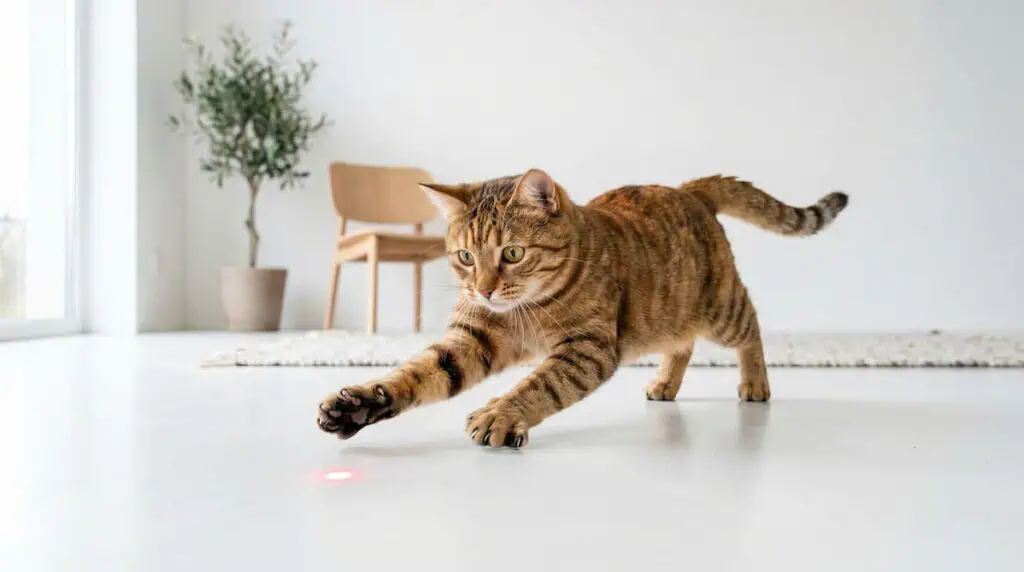
Electronic toys with light patterns and motion sensors, like the number two Amazon bestseller, represent the tech-forward end of solo play. These toys project moving light patterns that dart across the floor in unpredictable ways, triggering your cat’s chase instinct. Some models activate only when your cat approaches, preserving battery life. The best ones randomize their patterns so cats don’t learn the sequence and get bored. For cats who struggle when their humans leave, these toys can redirect anxious energy into healthy play. A stimulated cat is a calm cat.
The 3-3-3 Rule and Toy Introduction for New Cats
If you’ve just brought home a new cat, slow down before dumping a pile of toys at their feet. The 3-3-3 rule applies to toy introductions too. During the first three days, your cat is decompressing from the stress of a new environment. This is not the time for an intense wand toy session. Offer gentle, low-stimulation toys like soft plush mice or a simple catnip kicker. Let your cat approach the toy on their terms.
Over the next three weeks, as your cat learns your routine, you can gradually introduce interactive toys. Watch their reactions carefully. A cat who hides from a wand toy isn’t being difficult. They’re telling you they’re not ready. By the three-month mark, when your cat truly feels at home, their play preferences will have emerged clearly. Pay attention to which toys they gravitate toward during each phase. A shy cat might surprise you by becoming a ferocious hunter once they feel safe.
Kicker Toys: The Ultimate Cuddle-and-Combat Companion
Picture a cat catching a mouse in the wild. After the pounce and the grab comes the bunny kick, those rapid-fire back-leg thrusts that subdue prey. Kicker toys are designed specifically for this behavior. They’re long, plush, and sturdy enough to withstand your cat wrapping their front paws around them and going absolutely wild with their back legs.
SmartyKat kickers are sized perfectly for full-body engagement. They’re long enough that your cat can really commit to the wrestle. Kickers serve an important behavioral purpose. If your cat has a habit of wrapping around your arm and bunny-kicking, that’s not aggression. That’s misdirected hunting behavior. A kicker gives them an appropriate target. When your cat starts eyeing your forearm, redirect to the kicker. They learn quickly that the toy is for wrestling and your arm is not.
Many kickers come filled with catnip or silvervine. Silvervine deserves special attention here. About 30% of cats don’t respond to catnip at all. It’s genetic, and it’s completely normal. Silvervine, a plant from the kiwi family, triggers a similar euphoric response in many cats who ignore catnip entirely. If your cat has never seemed interested in catnip toys, a silvervine-filled kicker might be the revelation you’ve been waiting for.
Puzzle Toys and Snuffle Mats: Brain Games for Bored Cats
Mental stimulation matters just as much as physical exercise. A cat who solves a puzzle for their dinner is working their brain in ways a wand toy can’t replicate. Puzzle feeders turn mealtime into a hunting simulation. Instead of scarfing down kibble from a bowl in 90 seconds, your cat has to figure out how to extract each piece. This slows down fast eaters, reduces boredom, and provides genuine cognitive enrichment.
Jackson Galaxy’s cat-specific snuffle mat at $39.99 brings a concept traditionally associated with dogs into the feline world. The mat has fabric folds and pockets where you hide treats or kibble. Your cat uses their nose and paws to forage, mimicking the natural hunting behavior of seeking out prey in grass and underbrush. It’s surprisingly engaging for indoor cats who rarely get to use their sniffing instincts.
Food-dispensing balls and treat mazes range from simple to diabolically complex. Start easy. A ball with a single hole that drops treats when rolled is perfect for beginners. (Try this one from PetSafe) If you jump straight to a multi-step puzzle, your cat will get frustrated and walk away. Build up the difficulty gradually as your cat masters each level. The goal is engagement, not exasperation.
These toys are especially valuable for senior cats. An older cat with arthritis might not chase a wand toy anymore, but they can still forage in a snuffle mat. They can still bat at a treat ball. Keeping their brain active as their body slows down is one of the kindest things you can do for an aging feline friend.
Catnip, Silvervine, and Beyond: What’s Inside Matters
The filling inside a toy can make or break its appeal. Catnip is the classic, of course. That heady, euphoric response followed by a blissed-out nap is pure entertainment for both cat and human. But catnip quality varies wildly. Cheap catnip loses its potency fast, leaving you with a toy that smells like nothing at all. High-quality catnip, properly dried and stored, releases those irresistible oils when your cat bites and crinkles the toy.
Silvervine continues gaining popularity in 2026, and for good reason. It contains two compounds that attract cats, compared to catnip’s single compound. This means it works for a broader range of cats, including many of the 30% who are genetically immune to catnip’s charms. Some toys now feature blends of catnip, silvervine, and valerian root for maximum appeal across different feline preferences.
Freshness matters more than most cat parents realize. If your cat has ignored a catnip toy for months, try this. Store it in an airtight bag for a week, then take it out and give it a good crinkle between your fingers. This releases the oils trapped inside and can revive a toy your cat had written off as boring. Rotating catnip toys through airtight storage extends their effective life significantly.
Always check that fillings are safe and non-toxic, especially for aggressive chewers who might tear toys open. The filling should be clearly labeled. If a toy smells strongly of chemicals when you first open it, that’s not normal and worth avoiding.
Cardboard and Eco-Friendly Options: Sustainable Fun
Cardboard is having a moment in the cat toy world, and honestly, cats have been ahead of this trend forever. They’ve always loved boxes. Now brands are catching up with designed cardboard toys that appeal to eco-conscious cat parents while delivering exactly what cats want.
Kitty Kurlz is a simple, brilliant concept. It’s a textured, foldable cardboard structure that cats can scratch, bat, lounge in, and hide treats inside. It’s recyclable when destroyed, and it costs less than plastic alternatives. FurHaven’s two-story cardboard houses take this further, creating entire play structures from sustainable materials. Plus, they’re affordable enough to replace when your cat eventually shreds them.
Cardboard scratchers double as toys and furniture protectors. Your cat gets the satisfying shredding sensation they crave, and your couch survives another year. The texture and sound of cardboard scratching triggers something deeply satisfying in the feline brain. Plus, small amounts of ingested cardboard pass safely through the digestive system, unlike plastic or fabric.
These options appeal to cat parents trying to reduce their environmental pawprint. They’re affordable, recyclable, and surprisingly durable for the price point. A cardboard house might last months before needing replacement, and when it does, it goes straight into the recycling bin with no guilt.
Safety First: What to Avoid When Buying Cat Toys
Not all cat toys are created equal, and some are genuinely dangerous. The biggest hazard by far is small parts that can be chewed off and swallowed. Googly eyes on plush toys, bells that detach, feathers that pull free, all of these pose choking and intestinal blockage risks. Inspect toys before giving them to your cat and regularly after that.
String, ribbon, and yarn deserve special caution. Cats’ tongues have backward-facing barbs called papillae. These barbs make it almost impossible for a cat to spit out string once it’s in their mouth. If swallowed, string can cause a linear foreign body obstruction, a life-threatening condition where the intestine telescopes along the string. Surgery is often the only treatment. This is why wand toys must always be stored out of reach.
Avoid toys held together with glue, staples, or mystery adhesives. These can be toxic if ingested. Look for toys made with non-toxic, pet-safe materials and reputable manufacturing. A strong chemical smell right out of the package is a red flag. Quality toys shouldn’t reek of plastic or solvent.
Check toys regularly for wear and tear. A kicker that’s losing its stuffing needs to go. A wand toy with a fraying string needs to go. The moment a toy starts falling apart, it becomes a hazard. Replacing toys is cheaper than emergency vet surgery, every single time.
Budget-Friendly vs. Premium: Does Price Equal Quality?
The best-selling cat toys on Amazon all sit under $10, and cats love them. The MeoHui wand at $8.80 and the Catstages Tower of Tracks at $8.79 prove you don’t need to spend big for a happy cat. These toys are affordable enough to buy on impulse, and their review counts show cat parents are doing exactly that.
Premium brands like Jackson Galaxy and KONG charge $15 to $50 for their toys. What are you getting for that extra money? Generally, better materials, more thoughtful design, and longer durability. A Jackson Galaxy kicker uses denser stuffing and tougher fabric than a $5 drugstore alternative. It’ll survive more bunny-kicking sessions before it needs replacement. The design also reflects actual feline behavior expertise, not just whatever shape was cheapest to manufacture.
But here’s the thing. A $5 toy your cat goes nuts for beats a $50 toy they ignore every single time. The real value comes from matching the toy to your cat’s personality, not from the price tag. If you’re not sure what your cat likes, buy variety packs of budget toys to test different styles. Once you know your cat is a kicker fanatic or a wand toy devotee, then invest in a premium version of that specific type.
Watch your cat’s reaction. They’ll tell you what’s worth the money. A toy they sprint toward the moment it comes out of the closet is worth every penny, regardless of what that penny count was.
How to Build the Ultimate Cat Toy Rotation
Toy rotation sounds fancy, but it’s embarrassingly simple. Keep five to seven toys out where your cat can access them. Store the rest in a closet, drawer, or bin your cat can’t open. Every few days, gather up the current toys and swap in a different set from storage. That’s it.
The magic happens because cats are hardwired to lose interest in stationary objects that never change. In the wild, prey doesn’t just sit in the same spot for three weeks. When a “new” toy appears after a week in the closet, your cat’s brain registers it as novel prey.
Pay attention to which toys your cat gravitates toward and which they ignore completely. Remove the duds from rotation permanently. Donate them or pass them to a friend whose cat might have different preferences. Your rotation should evolve based on your cat’s demonstrated interests.
Combine different toy types for a well-rounded experience. A wand toy for interactive play, a kicker for wrestling, a puzzle feeder for mental work, and a ball track for solo batting. This covers all the hunting behaviors and keeps your cat engaged across different energy levels. High-energy days call for wand toy sessions. Lazy days suit snuffle mats and gentle kicker cuddles.
Seasonal rotation adds another layer of novelty. Just like retailers push Halloween and holiday toys, you can introduce “seasonal” toys from your own stash. Those Christmas-themed mice you packed away in January will be brand new again in December.
Frequently Asked Questions About Cat Toys
Interactive wand toys consistently top the list because they engage the full hunting sequence with you as the partner. But every cat is an individual. Some live for kickers. Some obsess over ball tracks. The best toy is the one your specific cat actually plays with.
Puzzle feeders and interactive electronic toys that engage both body and brain offer the highest stimulation level. A toy that makes your cat think while they move is more enriching than a toy that only does one or the other.
Quality matters more than quantity. Five to seven well-chosen toys in rotation is plenty for most cats. Having fifty toys scattered across the floor just creates clutter your cat will ignore.
For cats who need solo entertainment during long days alone, yes. The best ones randomize their patterns to prevent boredom. Always supervise initial use to make sure your cat isn’t frightened by the movement. Some cats find electronic toys thrilling. Others find them terrifying. You won’t know until you try.
Most plush toys can be spot-cleaned with pet-safe detergent or machine-washed on a gentle cycle. Always check the manufacturer’s label first. Hard plastic toys can be wiped down with mild soap and water. Catnip toys lose potency when washed, so you may need to refresh the catnip after cleaning.
The Bottom Line: What Your Cat Really Wants
Your cat doesn’t know what brand they’re playing with. They don’t care about the price tag or the cute packaging. They care about how a toy makes them feel. Does it trigger that deep, instinctive hunting sequence? And does the toy move like prey? Does it reward their effort with a satisfying catch?
The best cat toys of 2026 are the ones that match your individual cat’s play style and energy level. A high-energy Bengal needs different stimulation than a senior Persian. Start with a few proven winners. A wand toy for bonding, a kicker for wrestling, a puzzle feeder for brain work. Build from there based on what your cat tells you.
Rotating toys, engaging in interactive play, and understanding your cat’s instincts matter more than any single purchase. You can spend hundreds on premium enrichment toys, but if they sit untouched while your cat plays with a bottle cap, you’ve missed the point. Watch your cat’s reactions. Let them guide your future purchases. They know what they like, even if they can’t tell you in words.
Share the Cat Love
If this guide helped you find the perfect toy for your feline friend, share it with your cat-loving friends. Every cat parent deserves to know what toys actually work, not just what looks cute in the store. Tag us in your cat’s playtime photos. We’d love to see which toys made the cut in your home. And check out more of The Catington Post for cat health tips, behavior guides, and product reviews that help you give your fur child the best life possible.